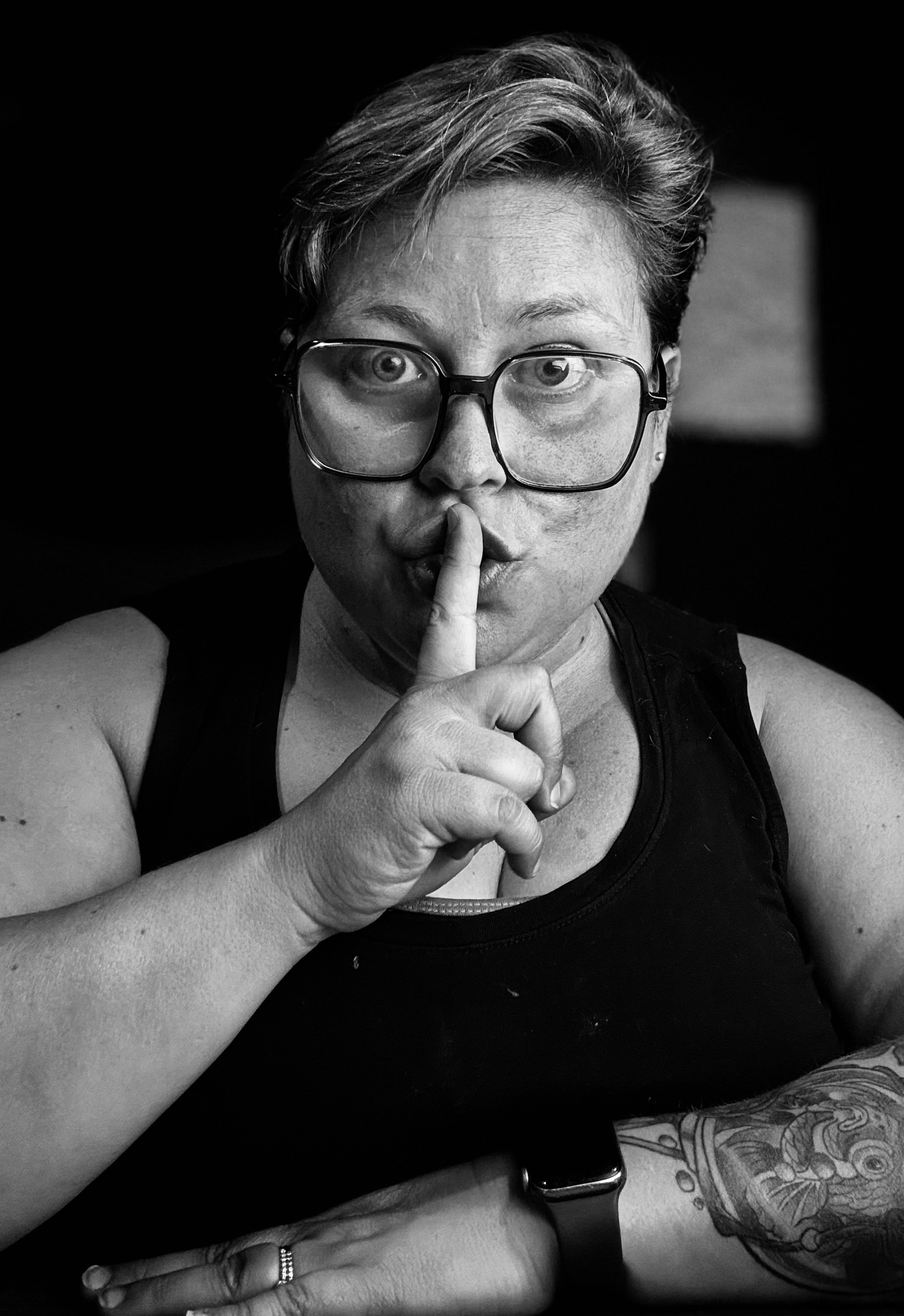
“Shhhhhhhh……. no one needs to see you……. you shouldn’t be here”
Recently, it feels like this is being said to those of us in the disabled community. Don’t get me wrong, it’s subtle and those outside of our community probably don’t hear it. But we hear it, and we are afraid for our loved ones, our families, and/or ourselves. What do I think is the driving force? Well, there are a few uncomfortable truths:
1: People with Disabilities Make other People Uncomfortable
“NO”, you say. But there is no way to deny it. It’s in the way people glance to the side at a child in a wheel chair. It’s a confused look by an adult clutching their favorite Elmo stuffy. It’s the dirty look at the person vocalizing and “not using their words”. It’s cutting off the child using the walker on the sidewalk, or making the joke “they are too young to have hip problems”. (Yes, that last one actually happened to me in my neighborhood while Lyra was learning to use hers.)
2: People with Disabilities are “inconvenient”… or that’s how it feels
If the looks and the comments aren’t enough to keep you home. The facilities sure make sure you know that you are “inconvenient”. We take Lyra out all of the time, and let me tell you, even modern buildings make it clear that the world doesn’t want to see people like her. At the Children’s Museum in Denver, there is 1 elevator. This is place were people bring small children with strollers, not to mention kids while mobility needs. The elevator entrance, on both floors, is a choke point. Getting in and out is a nightmare, let alone visiting multiple parts of the museum. Oh, and when the elevator broke, the museum simply sent out an email saying “leave your strollers at home.” There was no acknowledgment of a whole community of people who simply wouldn’t be able to access a whole floor. While the Denver Zoo now has a single good bathroom (yes, 1) to change Lyra’s diaper, a few years ago when I went to guest services to ask where I could change her that wasn’t a floor, they had no idea. GUEST SERVICES had no answers. Oh, and don’t get me started on how uninviting Disneyland and Disney World were. Having bus drivers roll their eyes at the inconvenience of a child in a wheel chair was really fun.
3: Statements, and Policies, by Government Officials and Government Departments make it clear they want us to go away. And new rules are shrinking our world.
Yes, I am going to being political. Yes, I am going to call out specific people. Just people something makes you uncomfortable, doesn’t mean you can avoid it. To be clear, I do not blame the current political climate all on Trump. Some policy changes started way before he became a political leader. However, he is good at saying the quiet part out loud, and he is the current head of country. So, his words and attitudes matter.
We know about the cuts to Medicaid, and I have spoken about that before. I will not shut up about it. However, first I want to talk about a policy called EVV or Electronic Visit Verification which is part of the 21st Century Cures Act (Dec. 2016). Bills take a long time to write and pass, so obviously this is pre-Trump. You can read the policy starting on page 243, but I want to focus on it’s intention and it’s real life impact. Basically, the law requires that anyone (other than a live in caregiver like me) who provides in-home care for someone must login and verify their location using an electronic device, like a cell phone, when providing care. It also means that you can leave the home while proving that care. This is to help prevent people from fraudulently claiming they with the patient when they are not. In theory, I get it. But let me show you what the reality is: My respite provider (B) just knocked on my door, while I am typing this, to ask about other things Lyra might like to do. Lyra is bored. There is a park 3 blocks away that Lyra loves to go to, but B can’t take her there because it’s against EVV rules. B can’t take Lyra swimming at my Dad’s house, or to the local recreation center. She can’t even go for a walk around the block. The only paid caregiver that can take Lyra anywhere is me. It makes her world so small.
Okay. Now on to Trumps own words… “allegedly”. According to Trump’s nephew, there are 2 statements Trump made. I was about people with disabilities in general, and another was about his nephew’s son (Trump’s great nephew) specifically. According to his New York Time’s article, Fred C. Trump III stated that during a meeting with himself and other adcocates, in January 2020 our president stated “Those people . . . ” Donald said, trailing off. “The shape they’re in, all the expenses, maybe those kinds of people should just die.”
“Those people” are people like Lyra.
In another conversation about Fred’s son, Fred reports Trump as saying, “I don’t know,” [Trump] finally said, letting out a sigh. “He doesn’t recognize you. Maybe you should just let him die and move down to Florida.” – Of course, Trump denies making these statements, but I personally don’t believe him. He’s denied a lot of things that have turned out to be true. Also, this attitude doesn’t surprise me. Just look at the estimated $700 billion- $1 trillion federal cuts to Medicaid spending slated for the next decade. The “One Big Beautiful Bill Act” can kiss my ass.
If you want to know how detrimental it is prodicted to be for people like Lyra, and families like mine, here are some articles you can read:
- “By the Numbers: Harmful Republican Megabill Will Take Health Coverage Away From Millions of People and Raise Families’ Costs”, Center on Budget and Policy Priorities
- “State-Level Impacts of Key Medicaid Provisions in the One Big Beautiful Bill Act”, Rand, June 18, 2026.
- “How Medicaid Cuts Hurt People with Disabilities“, Disability Law Center (Utah), 2025
- “Why Medicaid Is Important for Children and Youth With Disabilities”, Children’s Hospital of Philadelphia, April 2025
- “5 Key Facts About Children with Special Health Care Needs and Medicaid”, KFF, April 2025
- 1. Medicaid is a major source of coverage for children with special health care needs.
- 2. The share of children with special health care needs covered by Medicaid varies by state.
- 3. Children with special health care needs covered by Medicaid have greater health care needs compared with private insurance.
- 4. EPSDT helps children with special health care needs meet their health care needs and protects them from high out-of-pocket costs.
- 5. Medicaid coverage can facilitate access to care for children with special health care needs in school.
All of those are academic. But what does it look on the human side? It means financial ruin for families. Mark and I drained all of our savings and had to ask family for financial help before Lyra qualified for Medicaid. Not only were we drowning in medical bills, but we lost about 40% of our household income because I had to leave my job to care for her. Being her paid caregiver has given us financial stability. However, due to the recent Medicaid cuts, we are losing about 1/3 of the income I normally bring in. This isn’t because I am doing any less taking care of Lyra, or her needs have changed. She qualifies for the same number of hours of care, and the same programs, but access to those hours and programs has become significantly more restricted. While we are staying afloat by tightening our belts and cutting back where we can, many families like ours are already living on the edge. They don’t have places in their budget where they can cut back. Add in the rising fuel, energy, and food prices…. it’s a lot.
The last thing that scares me is the recent Justice Department memo regarding enforcement of the American’s with Disabilities Act and the Olmstead decision. Basically the Olmstead decision was the Supreme Court “that people with disabilities had to be served in the most integrated setting whenever possible”. (PBS)
This meant that they belonged in public schools, and schools had to meet their needs. Public buildings had to provide reasonable access (although I think “reasonable” is sometimes questionable). It also means that people with disabilities can’t be forced into institutions. That they belong in communities. The recent Justice Department memo says that Olmstead simply “isn’t enforceable”.
What are the implications of this? Well, I think it’s best stated by Maria Town in a recent interview on PBS:
This means that people’s ability to live in their homes and in their communities and with their families and friends that they love is in jeopardy.
If states decide not to follow decades of legal precedent and existing civil rights, it means that people with disabilities may be forced into institutions, instead of being provided with services that allow them to thrive in their communities. It may also mean that people’s health suffers. And in the worst-case scenario, it means people will die.
We know that people with disabilities and older adults have better outcomes and live longer lives when they are served in the community and not in institutions. So this could have extremely dire consequences for many people and their families across the country.
It also jeopardizes education for people with disabilities. And I am not talking about just kids like Lyra. Do you like all of that extra help your child with dyslexia gets? Yeah, that might not be a thing any more. You’ll have to find (and pay for) private tutoring. How about the special accommodations for Timmy’s ADHD? Sorry, those “rules” aren’t enforceable anymore according to the DOJ.
So, while my community is trying to get louder, and we have been waving warning flags for awhile, it feels more and more like society would rather not see us. Not see our children. Not see our families. They’d rather tuck us away, out of sight. The inconvenient and uncomfortable family member. The Kennedy’s had one they locked away. Trump thinks his should just die.
So, shhhhhhhh…….. no one needs to see you.

